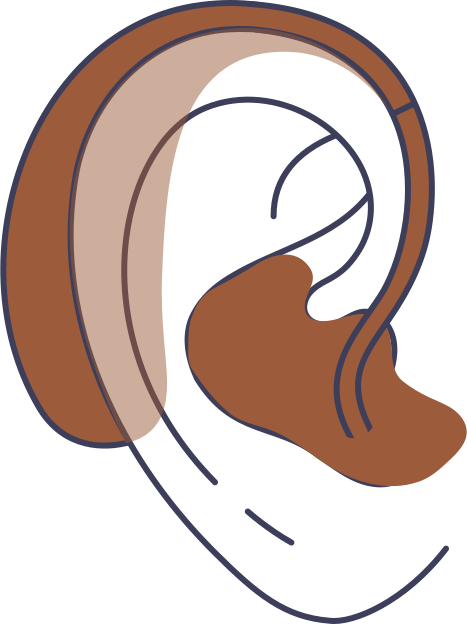
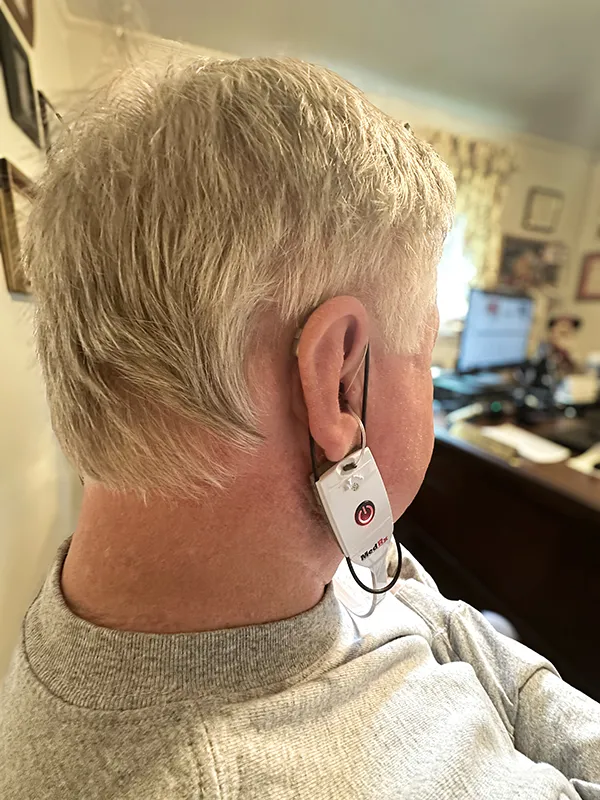
Sits behind the ear, with a tube running to a custom earmold inside the canal. The largest, most powerful style we fit, with long battery life, all the features, and the most amplification headroom of any device.


The right device, fit the right way.
Modern hearing aids are nothing like the ones you remember. They're discreet, smart, and astonishingly good, but only when they're chosen and verified to your hearing. We fit every major brand, and every fitting includes Real Ear Measurement, follow-up appointments, and a 45-day adjustment period.
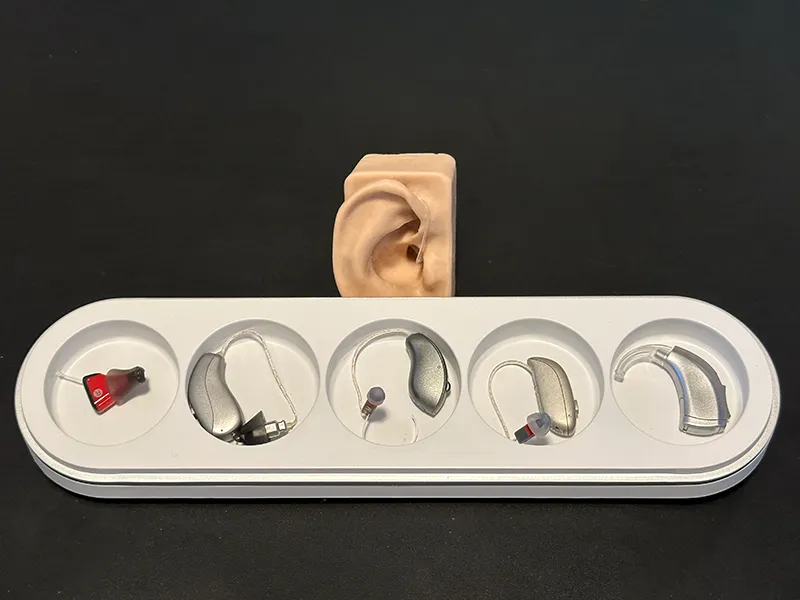
From visible to invisible: six styles.
Hearing aids come in different shapes. Bigger devices fit more powerful hearing loss and pack in more features; smaller devices are nearly invisible. We'll help you pick a style that suits your hearing, your hands, and your preferences.
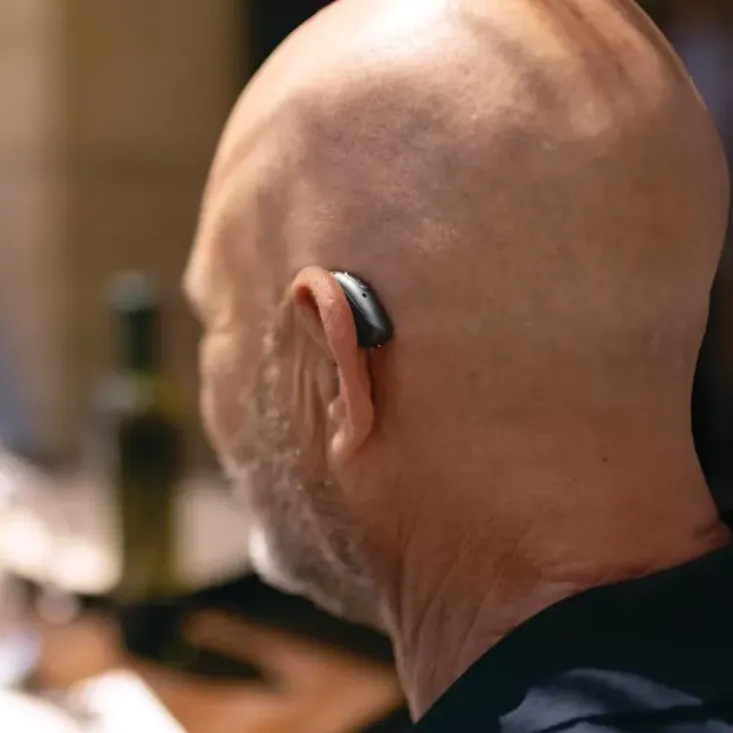
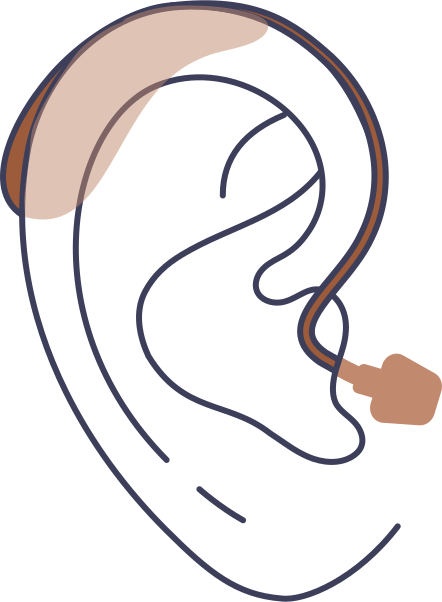
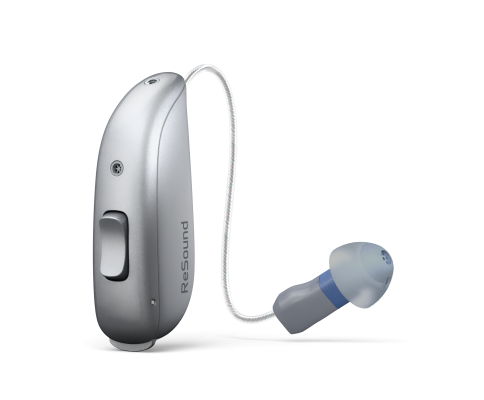
The microphone sits behind the ear; a thin wire carries sound to a tiny speaker placed inside the canal. Today's most popular style: discreet, light, and capable of handling mild through severe loss with ease.
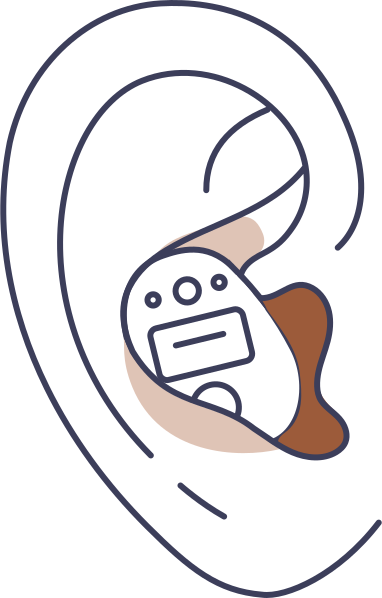
A custom-molded shell that fills the bowl of the outer ear, with the entire device housed in one piece. Easy to handle and forgiving of dexterity issues, with room inside for a bigger battery and more features.
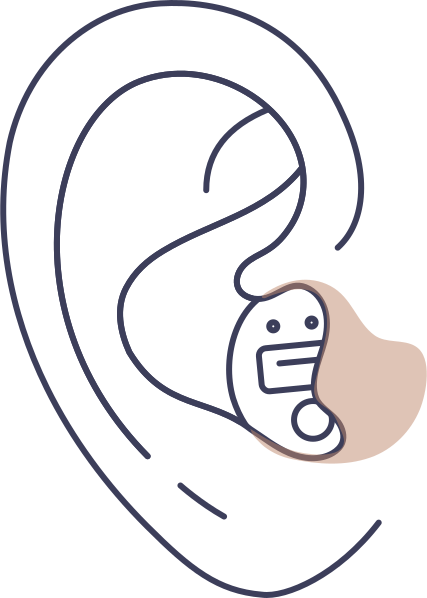
A smaller custom shell that sits at the entrance of the ear canal. Less visible than ITE while keeping good battery life and reliable handling, a practical middle ground between visibility and feature set.
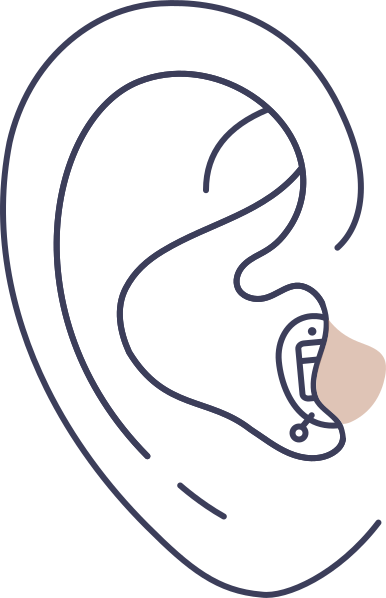
A custom-fit shell that sits deeper in the canal, with only a small portion visible from the side. Cosmetically subtle with capable processing, though the smaller form factor means tighter battery and limited connectivity.
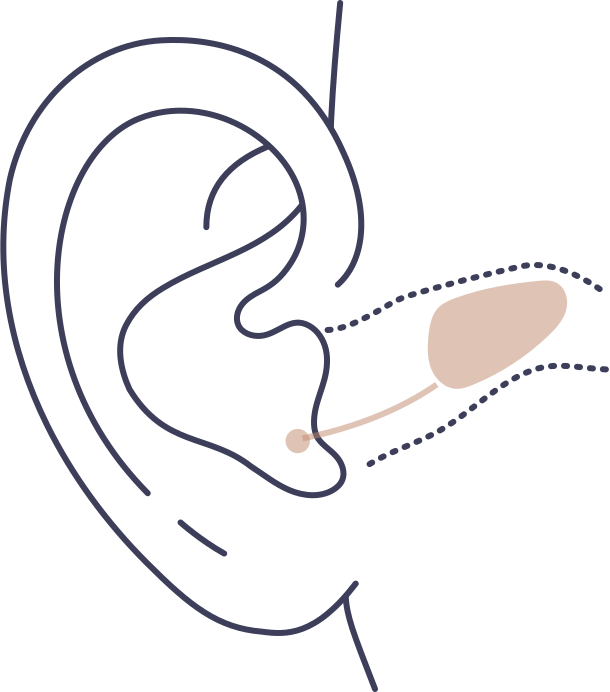
The most discreet style we fit. It sits very deep in the canal and is removed by a tiny string. Cosmetically invisible from any angle. Smaller batteries and limited Bluetooth, but unmatched discretion when that matters.
Lifestyle
Quiet conversations, restaurants, phone calls, video calls, music. Different environments call for different processing power and connectivity.
Hearing loss
Mild loss has gentle requirements; severe or profound loss needs more amplification and a bigger device. Your audiogram points the way.
Visibility & dexterity
Some patients want invisible. Others want easy to handle. Both are valid. The best device is the one you'll actually wear.
Three things that point us in the right direction.
Every major brand. None of them sponsored.
We fit every major manufacturer. The right brand for you is the one whose hearing aid fits your loss and your life, not the one with the biggest ad budget.

Danish-engineered AI hearing. The world's smallest AI-powered microRIE, built to have it all without making you choose between discretion, battery life, and speech clarity.
- AI focuses on whoever you're looking at
- The world's smallest AI-powered microRIE
- Best-in-class iPhone streaming and calls
- Heavy AI use trims battery from 30 to 20 hours
- RIE only, no in-the-ear custom styles

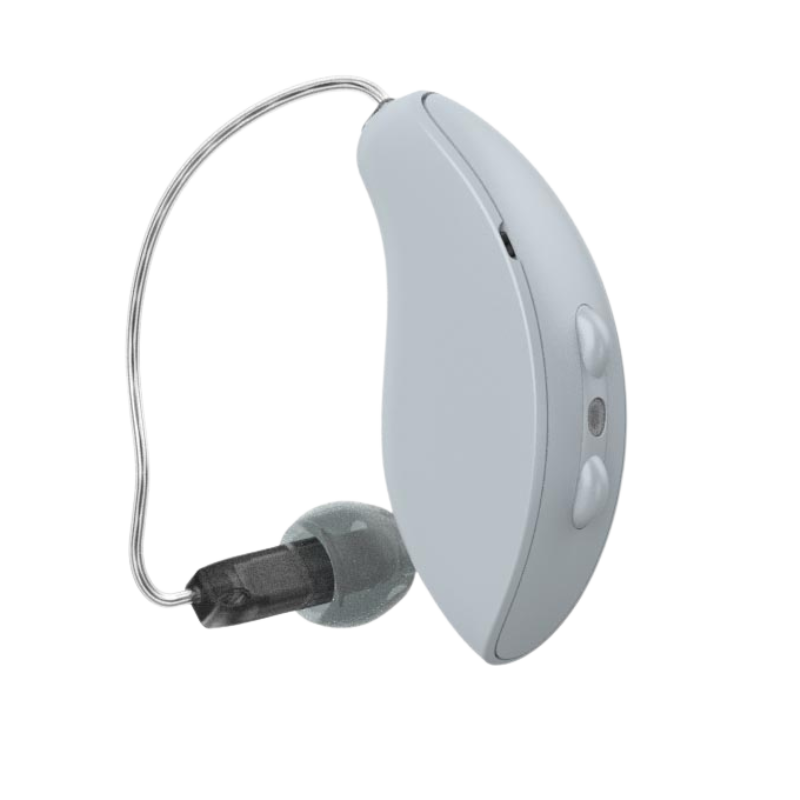
American-made hearing technology. The first hearing aid to use generative AI to steer its own microphones, predicting where speech is coming from before noise gets in the way.
- AI steers the mics toward speech in real time
- 51-hour battery, longest in its class
- Full range of custom in-the-ear styles
- Full features need a Bluetooth LE Audio phone
- Feature-rich setup can feel like a lot

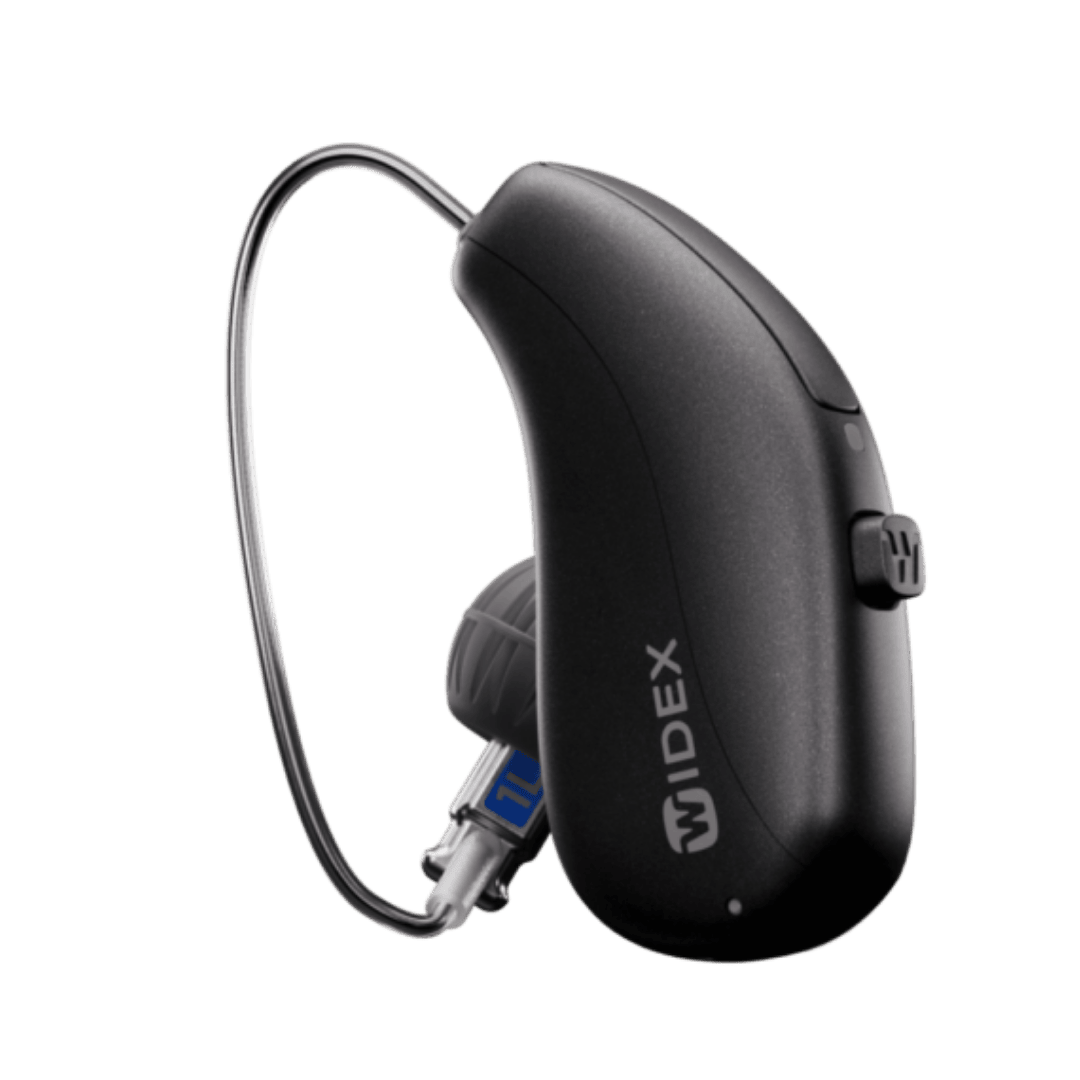
Danish engineering. PureSound zero-delay processing: the audiophile favorite.
- ZeroDelay processing: nothing sounds processed
- Speech Enhancer lifts voices without flattening the room
- Real-time feedback control, no whistling
- Auracast needs a firmware update to switch on
- Rechargeable RIC only at launch

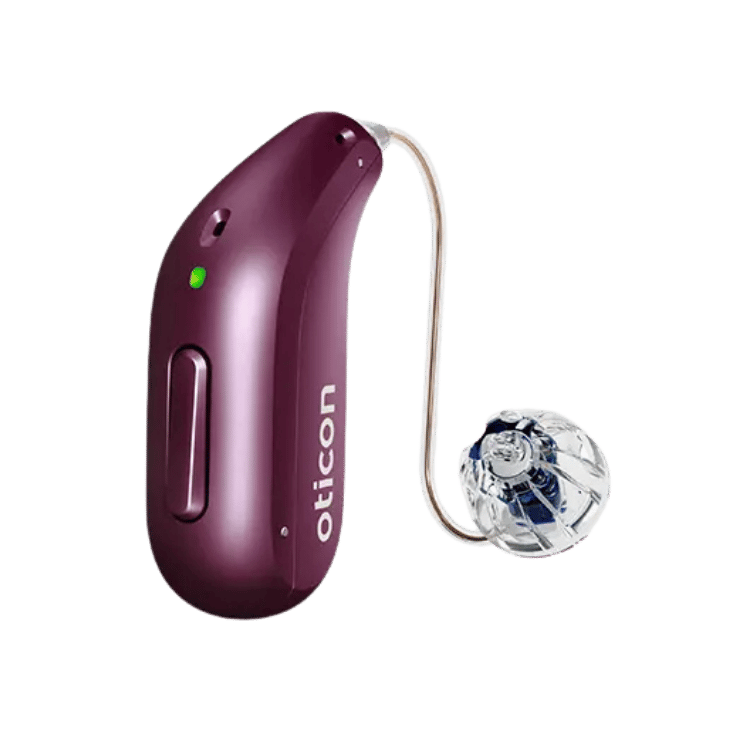
Danish precision engineering. The first hearing aid that reads your movement to understand what you want to hear, before you reach for the volume.
- Sensors track your movement and adapt automatically
- Top-ranked speech clarity in noisy rooms
- 20 hours per charge, fast 30-minute top-up
- Own voice can sound fuller with dome fittings
- Auracast supported, but few venues yet

A great hearing aid fit poorly is just an expensive paperweight.
Two patients with the same audiogram can hear the same hearing aid completely differently. We use Real Ear Measurement to verify what's actually reaching your eardrum, the standard fewer than three in ten U.S. clinics actually perform. It's how we know your fitting is right, not just close.
Learn about our fitting processLet's find the right hearing aid for you.
Consultation is free, no exceptions. Tell us a little about what you're trying to hear better, and we'll call you back within one business day to find a time that works.